Postpartum Skincare: Embracing Motherhood
December 30, 2025
Night-Time Skincare Routine For Healthy Skin
January 27, 2026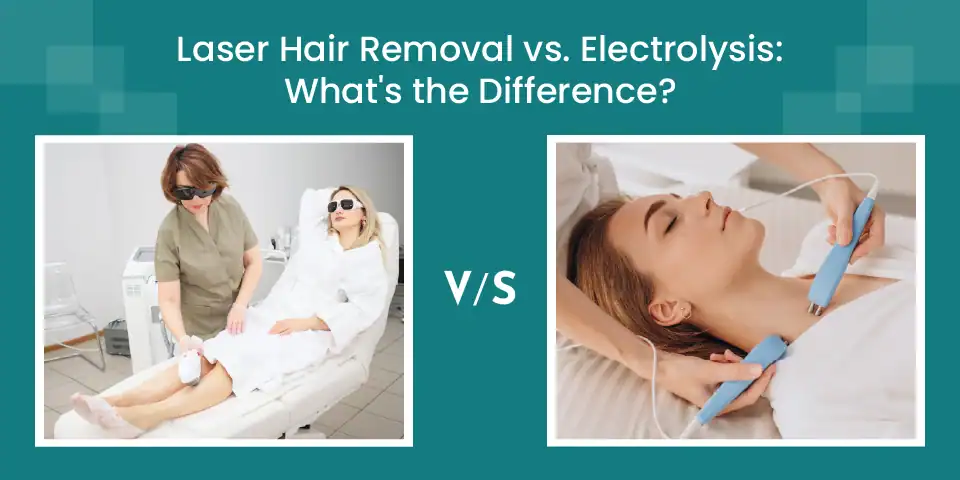
Long-term and permanent hair removal solutions have become quite in demand as more individuals seek an alternative to shaving, waxing, and threading. Such temporary solutions usually cause skin irritation, ingrown hair, and constant repair. Two of the most popular treatments among professionals include laser hair removal and electrolysis.
Although they both are intended to remove undesired hair, they differ in their mechanism of action, their different suitability, and their outcome. Knowing these differences will aid in selecting a technique that matches your skin type, hair colour, budget, and expectations over time.
A] What Is Laser Hair Removal?
Laser hair removal involves the use of focused light energy to hit the melanin present in hair. The laser burns the follicle of the hair and disrupts its capacity to grow hair. The technology is based on pigment, and therefore it is most effective where the hair colour is distinctly different from the skin tone, although newer devices can treat a wider range of skin types safely.
Hair removal using lasers is regarded as long-term hair removal and not permanent hair removal. The majority of individuals have slower growth and finer hair as they age, but still, the maintenance appointments might be necessary.
Laser hair removal is typically applied to:
- Legs
- Arms
- Underarms
- Bikini line
- Back and chest
- Face
The hair develops in phases; thus, several sessions are necessary. Depending on the location, treatments are typically four to six weeks apart. When people are thinking about their professional choices, they tend to consider services like laser hair removal treatment in South Mumbai to determine whether this method can be used.
B] What Is Electrolysis?
Electrolysis involves treating a hair follicle at a time. An electrical current is passed into the follicle using a fine probe, and the growth centre of the follicle is destroyed. When a follicle is destroyed, it cannot grow hair once more.
Electrolysis has been the only approved method of permanent hair removal and can be used with all skin tones and hair colours, such as blonde, grey, red, and very fine hair. This renders it especially useful when dealing with individuals who are not the most suitable candidates when it comes to laser procedures.
Electrolysis is especially suitable for:
- Upper lip
- Chin
- Jawline
- Eyebrows
- Small facial areas
The treatment of every hair takes time, so sessions may be time-consuming. Electrolysis is a more long-term commitment since a number of sittings are required to capture hairs during their active growth period.
C] Laser Hair Removal vs Electrolysis: Key Differences
When comparing laser hair removal vs. electrolysis, the differences become much clearer when broken down directly.
Key differences include:
- Technology:
- Laser uses light energy targeting hair pigment
- Electrolysis uses electrical current applied to individual follicles
- Speed:
- Laser treats multiple hairs at once, making it faster for large areas
- Electrolysis treats one hair at a time
- Effectiveness:
- Laser offers long-term reduction
- Electrolysis provides permanent removal
- Pain level:
- Laser feels like a warm snap or rubber-band sensation
- Electrolysis can feel sharper due to its precision
- Time commitment:
- Laser requires fewer sessions overall
- Electrolysis requires frequent visits over a longer period
D] Electrolysis or Laser Hair Removal: Which Is More Effective?
Choosing between electrolysis vs laser hair removal depends largely on hair texture, colour, and treatment goals. Laser is highly effective for coarse, dark hair and works well for covering large areas efficiently. Electrolysis is more effective for fine hair, lighter colours, and hormonally driven facial hair.
Effectiveness depends on:
- Hair pigmentation
- Hair thickness
- Treatment area size
- Hormonal influences
Laser treatments may require maintenance sessions over time, especially if hormonal changes occur. Electrolysis focuses on complete follicle destruction, making it ideal for areas where permanent precision is required. Some people choose a combination approach — using laser first to reduce overall hair volume, then electrolysis to remove remaining stubborn hairs permanently.
E] Safety, Side Effects & Recovery
Both treatments are considered safe when performed by trained professionals using appropriate equipment.
Laser hair removal side effects may include:
- Temporary redness
- Mild swelling around follicles
- Increased skin sensitivity for 24–48 hours
Electrolysis side effects may include:
- Localised swelling
- Pinpoint scabbing
- Mild tenderness
These reactions usually resolve on their own. Proper skin assessment before treatment plays a key role in preventing complications such as burns or pigmentation changes. This is why many people prefer treatment under the care of a qualified skin specialist in South Mumbai, where individual skin and hair characteristics are assessed carefully.
F] Cost Comparison: Laser vs Electrolysis
The cost is a key parameter when comparing laser vs electrolysis. The cost of laser hair removal is normally per session and per treatment area, yet it is cheaper for the large body parts. Time is frequently used as the basis of charging electrolysis, and it can accumulate when compared to dense hair growth.
General cost considerations include:
- Laser is expensive per session, yet fewer sessions are required.
- The sessions of electrolysis are fewer, yet more frequent.
- Prolonged cost is determined by the density of hair and the duration of treatment.
You can check the laser hair removal cost in Mumbai to come to terms with long-term budgeting before committing to a plan.
G] Factors to Consider Before Choosing a Treatment
There are a number of individual considerations to be made before making a decision between laser and electrolysis.
Considerations to bear in mind are:
- Skin tone and hair colour
- Size of the treatment area
- Outcome (reduction vs permanence) desired.
- Pain tolerance
- Availability of time for sessions
- Budget and long-term cost
Another factor that can affect outcomes is hormonal state, and it should be consulted.
H] Consulting a Skin Specialist
It is not always easy to make a choice between electrolysis treatment vs laser hair removal without the help of professionals. A consultation will provide an opportunity to evaluate the type of hair, skin sensitivity, medical history, and expectations reasonably. A qualified expert will be able to prescribe an individualised course of treatment, be it either one or both, and make sure that it is safe and has realistic results.
Conclusion
Comparing laser hair removal and electrolysis, there is no universal better choice. Laser is effective in the long-term reduction of large areas, and electrolysis permanent removal is effective with accuracy. The most appropriate option lies in the personal colour of skin, hair structure, treatment objectives, and style of life. Awareness of such differences and professional advice can be used to achieve safe, effective, and satisfactory outcomes.