Pico Laser vs CO₂ Laser: How to Choose the Right Treatment for Your Skin
August 20, 2026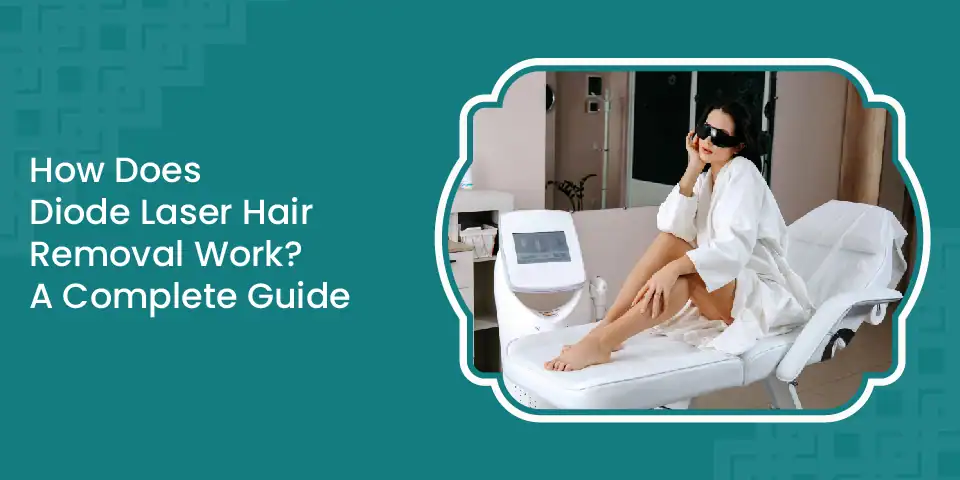
Diode laser hair removal is a medical aesthetic procedure used to achieve long-term reduction in unwanted hair growth. It uses concentrated laser energy that is absorbed primarily by melanin, the pigment present in the hair. When this energy is absorbed, it is converted into heat, creating a controlled thermal effect on structures within the targeted hair follicle.
The aim is to reduce the follicle’s ability to produce hair over successive treatment sessions rather than guarantee permanent hair removal. Since hair follicles are naturally present in different stages of the growth cycle at any given time, multiple sessions are generally needed to progressively target suitable hairs. Treatment response can vary based on factors like hair colour, thickness, skin type, treatment area, and individual hair growth patterns.
A] What Is Diode Laser Hair Removal and How Does It Work?
A diode laser is a laser system commonly used for hair reduction. Many diode laser devices operate around the 800–810 nm wavelength range, although the exact wavelength and treatment parameters can vary between devices. The laser is designed to deliver energy that is preferentially absorbed by melanin in the hair. The process is based on selective photothermolysis, where light energy is converted into heat within the intended target. The main steps are:
- Melanin absorption: Pigment in the hair absorbs the delivered laser energy.
- Heat generation: The absorbed energy is converted into heat within the hair and surrounding follicular structures.
- Follicular targeting: The thermal effect can damage structures involved in hair growth, reducing the follicle’s ability to produce new hair.
- Protection of surrounding skin: Appropriate wavelength selection, pulse duration, energy settings, and cooling help concentrate the treatment effect while limiting unwanted heating of the surrounding skin.
The effectiveness and safety of treatment depend on selecting parameters appropriate for the individual’s skin and hair characteristics.
B] Why Does Diode Laser Hair Removal Require Multiple Sessions?
Hair grows through a continuous cycle with three main stages. Laser treatment is generally most effective during the active growth phase, when the hair follicle is more responsive to the laser energy. These stages include:
- Anagen: The active growth phase, when the hair is actively connected to the follicle.
- Catagen: A short transitional phase during which active growth stops and the follicle begins to regress.
- Telogen: The resting phase, after which the hair eventually sheds and the cycle begins again.
Not all hairs are in the same phase at the same time. As a result, one session cannot effectively target every hair follicle in the treatment area. Multiple sessions allow more hairs to be treated when they are in a suitable growth phase. This progressive approach is also an important part of laser hair removal, where treatment is planned across multiple sessions based on individual hair growth patterns.
The number and timing of sessions can vary based on the treatment area, hair colour and thickness, skin type, individual growth patterns, and hormonal influences.
C] Who Can Benefit From Diode Laser Hair Removal?
Diode laser hair removal can be considered for people with a range of skin characteristics and hair characteristics when appropriate treatment parameters are selected. However, treatment response can vary depending on the amount of pigment in the hair and the surrounding skin.
- Darker, coarser hair: Hair with more melanin generally absorbs more laser energy and tends to respond better.
- Different skin characteristics: Treatment can be performed across a range of skin types when suitable settings, wavelengths, and cooling methods are used.
- Light-coloured hair: Blonde, grey, and white hair may respond less effectively because they contain less melanin for the laser to target.
- Individual assessment: Skin type, hair characteristics, treatment area, and previous tanning or pigmentation concerns should be assessed before treatment.
- Appropriate parameters: Selecting suitable energy, pulse duration, and cooling is important for balancing effectiveness with skin safety.
Using inappropriate laser settings can increase the risk of adverse effects, including burns and temporary or persistent pigmentation changes.
If you have sensitive skin, learn more about laser hair removal for sensitive skin and the precautions that can help support safe treatment.
D] What Happens During a Diode Laser Hair Removal Session?
A diode laser session generally involves assessment, preparation, treatment, and post-treatment guidance. The process is tailored to your individual needs, with your dermatologist determining the appropriate approach based on your skin and hair characteristics.
- Before the Treatment
Your dermatologist assesses your skin type, hair characteristics, treatment area, medical history, and expectations. They may also check for factors that could affect treatment suitability, such as recent medications, active skin conditions, pregnancy, or recent tanning and sun exposure. You may be advised to shave the area before treatment. Waxing or plucking is generally avoided before a session because removing the hair from the root can interfere with the laser’s target.
- During the Procedure
Protective eyewear is used to shield the eyes from laser light. The handpiece is then applied to the treatment area, with contact cooling or an integrated cooling system used where appropriate.
You may notice warmth, mild stinging, or a snapping sensation during individual laser pulses. The level of discomfort can vary depending on the treatment area, hair thickness, and individual sensitivity.
- Immediately After Treatment
Temporary redness and mild perifollicular swelling around the treated hairs can occur and usually settle over time. Appropriate laser settings and professional supervision help minimise complications. Although uncommon, burns and pigmentation changes are possible risks and should be discussed before treatment.
E] What Results Can You Expect After Diode Laser Hair Removal?
Diode laser hair removal produces progressive hair reduction rather than an immediate or guaranteed permanent result. After treatment, targeted hairs may gradually shed as the body clears them. This shedding can occur over approximately one to three weeks, although the timing varies between individuals and treatment areas. With successive sessions, many patients may notice:
- Reduced hair density: Fewer hairs may grow back over time.
- Finer regrowth: Remaining hairs may become finer or less noticeable.
- Slower growth: Hair may take longer to return between sessions.
Results vary based on hair colour and thickness, skin type, treatment area, hormonal factors, and adherence to the recommended schedule. Some patients may need maintenance sessions, particularly when hormonal factors contribute to hair growth.
It is important to distinguish long-term hair reduction from permanent hair removal. After treatment, follow your provider’s aftercare instructions. This may include using a broad-spectrum sunscreen with SPF 30 or higher, limiting direct sun exposure, and following specific guidance for the treated area.
Conclusion
Diode laser hair removal uses concentrated laser energy to target melanin in the hair and create a controlled thermal effect on the follicular structures involved in hair growth. Because hair follicles move through different growth phases, multiple sessions are needed to progressively target suitable hairs and achieve long-term reduction.
Treatment response and safety depend on individual skin and hair characteristics, appropriate laser parameters, cooling, and professional supervision. A consultation with a qualified dermatologist in South Mumbai can help determine whether diode laser hair removal is suitable for you and what treatment approach may be appropriate. If you are considering treatment, contact us to discuss your concerns and understand your options.