IPL vs Laser Hair Removal: What’s the Difference?
April 10, 2026
Hair Removal Cream vs. Laser: Which Is the Better Choice?
June 18, 2026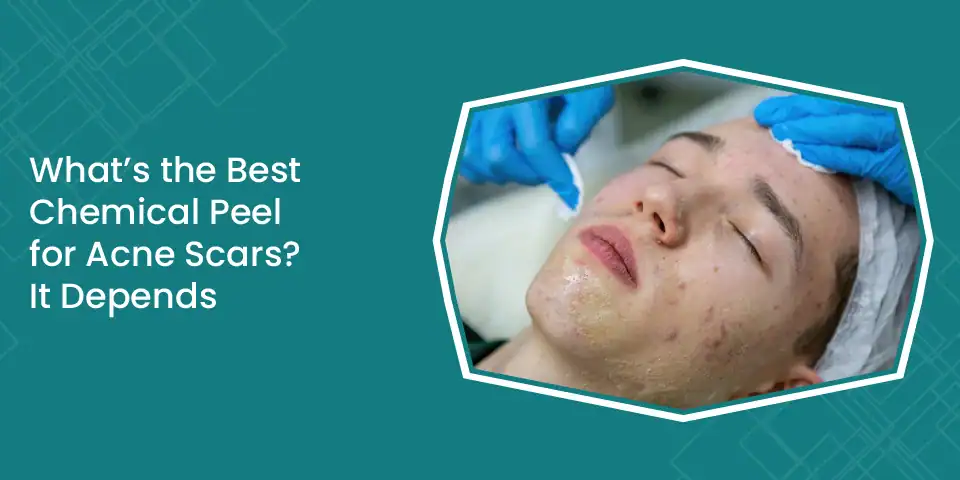
The acne scars may be long-lasting even when the active breakouts have been treated, and this can impact the smoothness and look of the skin. A lot of individuals seek medications capable of improving the skin texture and eradicating noticeable scars. A chemical peel for acne is one such treatment recommended by most dermatologists, wherein they recommend a treatment that sheds off the decayed skin layers and allows healthier skin cells to grow.
Certain peels target lighter skin consequences, whereas others visualize deeper scars. Learning how chemical peels for acne scars can aid people in decision-making concerning the use of this tool.
A] What Are Chemical Peels?
Chemical peels are cosmetic procedures that apply an acidic solution to the skin to exfoliate the skin’s surface layer.
In chemical peeling for acne, the cure is directed towards working on the skin that has been afflicted with blemishes. Acne may leave some residual imprints, texture imbalance, and shallow scars. People, in fact, the skin, which naturally renews itself slowly over time, is can be stimulated by chemical peels.
The treatment may be modified at the discretion of the peel strength. Other peels act mildly on the surface of the skin, whereas others go deeper to deal with more prominent issues.
B] How Chemical Peels Help Acne Scars
Chemical peels help in making the scars of acne better, as they damage the cells in the skin and trigger the growth of new skin. With old skin becoming scaly and new skin growing up evenly, irregular texture and deep spots may clear away.
People choose chemical peels for acne because the treatment of acne helps refill the skin and make a person look better with time. Peels can be used in sequence to flatten the shallow scars and achieve a smoother, more beautiful look on the skin.
C] Types of Chemical Peels for Acne Scars
The chemical peels are mainly of 3 types.
- Superficial peels: This is the lightest type of treatment. They are applied on the topmost part of the skin and are commonly applied to enhance acne scars, dry skin, and irregular coloring. The fact that they are mild means that they normally entail a small amount of recovery time and can be replicated frequently.
- Medium peels: These penetrate deeper in the skin. The peels are commonly applied to moderate acne scars and pigmentation. They eliminate more impaired skin cells and promote augmented skin renovation, which has the capacity to enhance texture and tone.
- Deep peels: Deep peels go deeper into the skin and are applied to scars that are more pronounced or serious scars. These medications are more intense and normally take a long time to heal. A dermatologically trained Skin Specialist in South Mumbai would be able to check the skin and advise on the best form of peel according to the needs of the respective skin.
D] Popular Ingredients Used in Peels
Various chemical peels have varied ingredients in their active treatments based on the skin concern being treated.
- Glycolic acid: It has been one of the most popular substances used in chemical peels. It assists in the exfoliation of dead skin cells on the surface and aids in making the skin texture smoother. It may be applied in mild/superficial peels.
- Salicylic acid: It is an additional favourite ingredient to use, especially to acne prone skin. It assists in clearing oil pore blockage, as well as reducing breakouts, hence it is usually among the choices of the best chemical peel for active acne.
- Trichloroacetic acid (TCA): It is widely applied in medium-depth peels. It penetrates deeper into the skin and can assist in enhancing scars and pigmentation that are more visible.
The prescription of these ingredients varies in their strengths based on the treatment strategy. Chemical Peel Treatment In South Mumbai usually blends the correct ingredients and strength of peels in accordance with the skin of the patient.
E] Who Is a Good Candidate for Chemical Peels?
Chemical peels may be suitable for people with mild to moderate acne scars, uneven skin tone, or dark marks left by breakouts. Healthy skin without infections or severe irritation usually responds best to this treatment.
The peel can also be influenced by the skin type and the depth of the scar, as well as past treatment. A skin test can be used to identify whether chemical peeling for acne is the best option to take in your case.
F] Possible Side Effects and Recovery
A short-term effect of a chemical peel is that the skin may turn a bit red or tender after a peel. Mild peeling or dryness can also take place with the renewal of the skin.
The time taken to recover is also determined by the peel strength. Weak peels do not need much time to heal, whereas frequent procedures can take several days to heal. The knowledge of expected results and Chemical Peel Treatment Cost In Mumbai may assist individuals in planning their treatment and post-treatment care adequately.
Selecting the best chemical peel for acne scars is influenced by a number of factors. Professional assessment allows making sure that the chosen treatment is not dangerous and safe for your skin.
Conclusion
Acne scars and uneven skin texture are greatly treated with chemical peels to enhance their appearance. These treatments can assist the skin to appear less wrinkled and clearer as the skin regenerates other skin cells and gets rid of the damaged ones.
Due to varying strengths of the chemical peels, it is relevant to choose the appropriate type of peel. An ideal cure for it varies based on the skin type, the severity of the scar, and the general health of the skin. The use of a skilled dermatologist facilitates the provision of safe and appropriate treatment to your skin.